
Oil Painting Palette: How Professional Painters Prepare Their Palette

Updated: Sep 3

The palette is one of the most important tools in an oil painter's studio.
It is not simply a surface where colors are placed.
It is the place where painters test relationships, compare mixtures, and make decisions before applying paint to the canvas.
Many painters focus on choosing high-quality pigments and brushes, but overlook one important factor:
The color and surface of the palette itself can influence how you see and mix color.
Professional painters understand that accurate color decisions begin before the brush touches the canvas.
Why the Color of Your Palette Matters
When you mix oil colors, you are constantly comparing relationships:
Light against dark
Warm against cool
Saturated against neutral
The background color behind your mixtures affects your perception.
For example:
A white palette can make colors appear darker and more saturated.
A very dark palette can make lighter mixtures appear brighter than they actually are.
A warm-colored palette can make your mixtures appear cooler.
A cool-colored palette can make your mixtures appear warmer.
Because of this, many painters prefer a palette with a middle value and neutral temperature.
The Ideal Palette Color for Oil Painting
A good oil painting palette is usually:
Middle value (not too light, not too dark)
Slightly cool or neutral
Similar in tone to the surface of the painting
Many professional painters prefer a muted gray, green-gray, or brown-gray palette.
A middle tone allows both dark and light mixtures to be judged more accurately.
The goal is to create a neutral environment where colors can be compared realistically.
Preparing a Raw Wooden Palette for Oil Painting
Many wooden palettes are sold unfinished.
Raw wood may look beautiful, but it creates several problems for oil painters.
Unsealed wood can:
Absorb oil from your paints
Make mixtures dry faster
Change how colors appear
Make paint harder to mix
Before using a wooden palette, it is recommended to prepare and seal the surface.

Step 1: Create a Middle-Tone Surface
A traditional approach is to create a muted middle-tone surface.
A useful mixture can include:
Raw sienna
A small amount of black
A touch of green
The goal is not to create a beautiful color.
The goal is to create a practical working surface.
A balanced middle tone allows your paint mixtures to appear closer to how they will look on the canvas.
Step 2: Seal the Wooden Surface
After the color layer dries, the wooden palette should be sealed.
This prevents the wood from absorbing the oil from your paint.
Common options include:
Polyurethane varnish
Oil-based finishes
Multiple layers of drying oil
The important goal is creating a surface that is:
Smooth
Durable
Resistant to scraping
Easy to clean
An Alternative Method: Conditioning the Palette With Oil
Some painters prefer a slower traditional method.
Instead of painting and varnishing the palette, they gradually build a surface by applying thin layers of linseed oil.
The process:
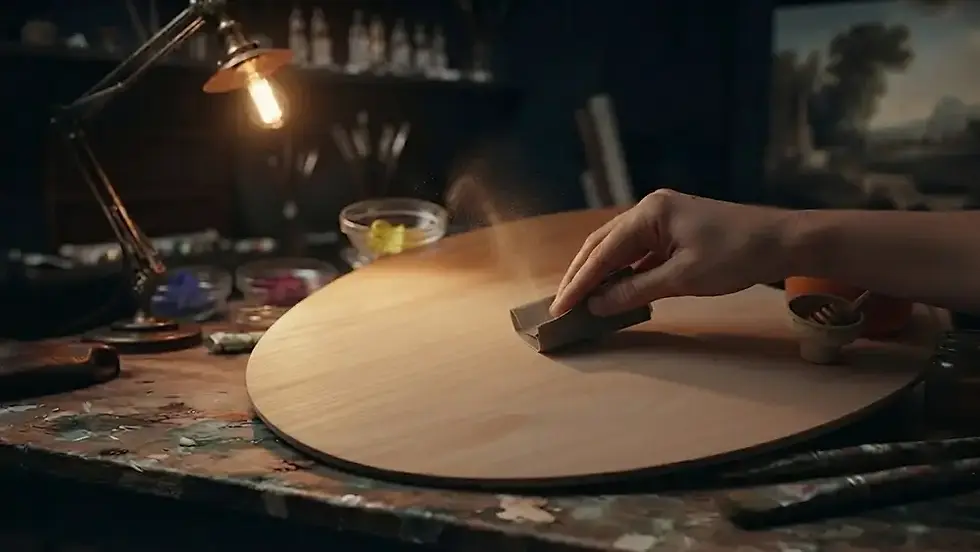
Lightly sand the wood
Apply a thin layer of linseed oil
Allow it to dry
Repeat several times
Over time, the wood becomes less absorbent and develops a natural painting surface.
How Professional Painters Maintain Their Palette
Cleaning a palette does not always mean removing every trace of paint.
Many painters allow a thin layer of previous mixtures to remain.
Over time, this creates a toned surface that can become comfortable for mixing.
However, this method requires patience.
For beginners, a prepared palette is often easier because the correct surface is available immediately.
How to Clean an Oil Painting Palette
A simple cleaning routine:
Remove excess paint with a palette knife
Wipe remaining paint with a cloth or paper towel
Clean any stubborn areas carefully
Avoid damaging the surface with aggressive scraping.
A well-maintained palette can last for many years.
The Palette Is Part of Your Painting Process
A painter's palette is not just a tool for holding colors.
It is part of the way a painter thinks.
The organization of colors, the surface tone, and the way mixtures are tested all influence the final painting.
When painters create a reliable palette setup, they remove unnecessary confusion and make better color decisions.
The better you understand your tools, the more freedom you have in your painting.
Go deeper into the world of painting.
Discover more artists, ideas, and perspectives for your own practice.
Explore Introspective Art


Comments