
Moriya Kaplan

Updated: Sep 3
Israel · 1978
I am a figurative artist working in oil. I explore inner states and psychological tension, developing a visual language through a restrained, cinematic palette and images that exist between reality and inner experience.

More Precious Than It Seems | 2026 | 50 × 60 cm, oil on canvas
The Beginning
What was your first connection with painting?
Was there a specific moment, artwork, artist, or experience that changed the way you see or create art?
Since childhood, I have felt a natural affinity for contemplation - the ability to look closely for long periods of time and notice states and the ways they
change. Gradually, this shaped my way of seeing: perceiving not only external form, but also the inner state it can convey. It was from this attentive
observation that my interest in painting grew.
One of my earliest memories is of two reproductions hanging above my childhood bed: Raphael's Sistine Madonna and Vrubel's Seated Demon. This
contrast between fragile beauty and inner tension largely determined the direction of my artistic explorations.
Choosing Painting as a Life Path
What made you choose painting as a way of life and dedicate
a significant part of your journey to it?
For me, there was never a question of choosing. Art did not become a profession for me at any particular moment - it had always been with me. I
simply followed this path from the very beginning. Over time, I only came to understand more clearly that it is my way of perceiving the world and
speaking about it. I thought more about choosing a medium than about choosing the path itself.
Artistic Language
How would you describe the visual language and main
characteristics of your work?
What recurring themes, elements, colors, or ideas appear
in your paintings, and what do they mean to you?
My visual language is built on figuration, a restrained cinematic palette, and psychological tension. I am interested not so much in action as in the state
and atmosphere of what is taking place.
Images of children often appear in my work. Childhood is a complex psychological space in which, on the one hand, there is silence, calm, and a sense
of protection, and on the other, complete vulnerability. I intensify this contradiction through gestures and poses that contain a sense of pause and slight unnaturalness. It is precisely the collision of these opposites that creates the psychological tension I explore in my work.
Creative Process
Describe your creative process from the first idea to the completion of a painting.
My working process begins with the psychological state I want to convey.
At this stage, the palette plays a key role. Only then do I search for an
image capable of expressing that state. During the development of the sketch, the narrative, figures, and composition may change, but the initial
state remains unchanged. Gradually, I build the dynamics and rhythm of the work. When the compositional solution becomes coherent and
convincing, I transfer the idea onto canvas.
Inspiration and Motivation
What places, experiences, or ideas do you draw inspiration from?
What continues to motivate you to create, even after years of working as an artist?
My primary source of inspiration is the inner states and psychological processes that I experience and explore. I find their reflection in the external world - in
travel, history, literature, cinema, psychology, Jewish culture, as well as in chance scenes from everyday life. Sometimes a small fragment - a gesture, a
place, or a scene I happen to witness - is enough to evoke an inner response or a memory and become the starting point for a new work.
I am motivated by inner exploration. Life experience and the psychological states I go through become material for my work. Painting allows me to reflect on
this experience and translate it into visual form.
Challenges and Growth
What was a significant challenge you faced during your journey as a painter?
How did that experience influence your development as an artist?
A significant challenge for me was returning to artistic practice after a long break. It took time for me to regain confidence in myself as an artist.
This experience became an important turning point in my development. Returning to painting led me to reconsider my own practice and search
for a new visual language.
Looking Back
If you could speak today with the painter you
were at the beginning of your journey, what would you tell them?
I would tell myself not to be afraid of pauses and changes. Even periods of doubt can become part of development. It is important to
preserve inner honesty and trust your own way of thinking, seeing, and feeling.

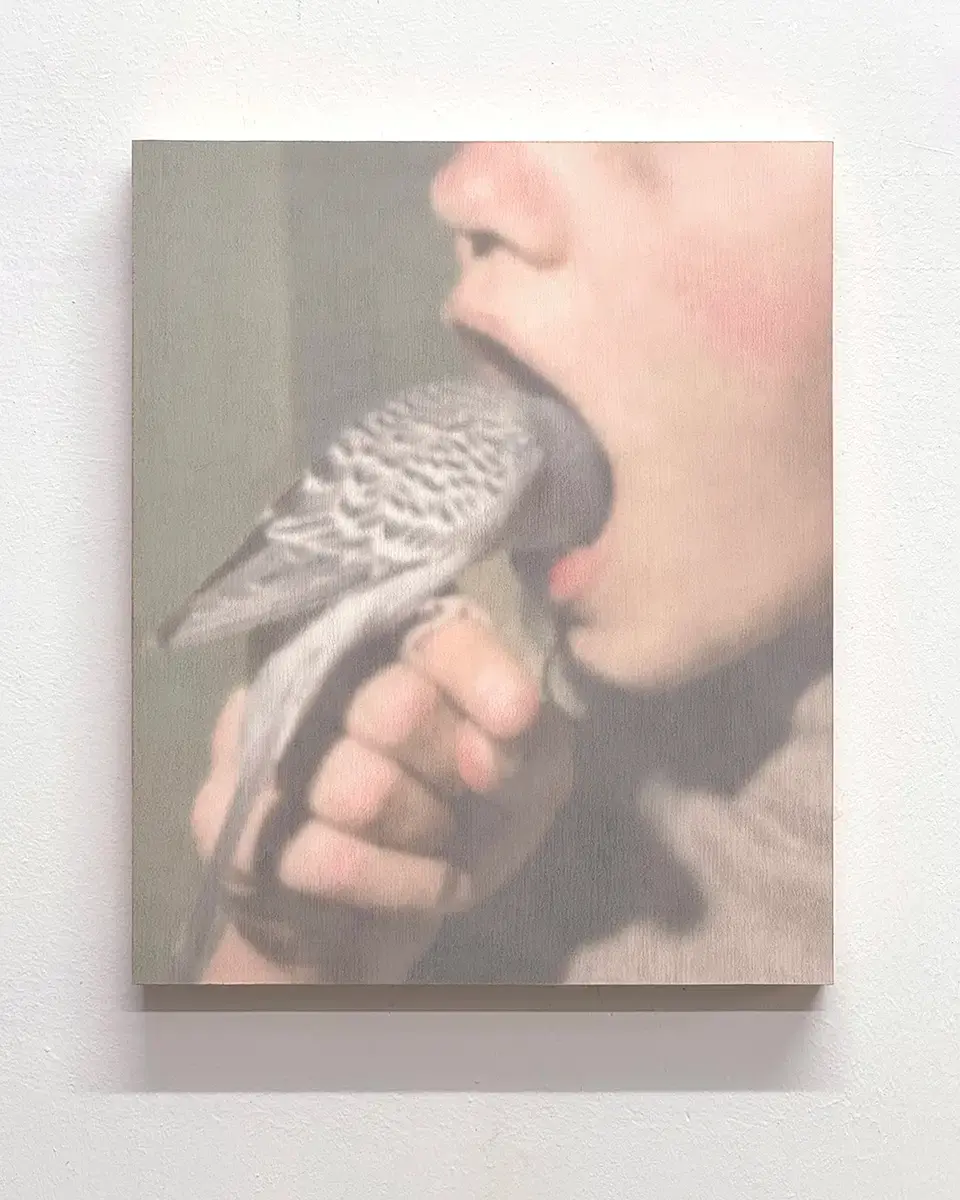
Do You See Me? | 2026 | 50 × 40 cm oil on canvas
Influences and the Conversation Around Painting
Which artist from the past has influenced you the most, and why?
Which contemporary painter do you admire and would
like to introduce to a wider audience?
I have been influenced by artists for whom the image becomes a way of exploring an inner state: Vrubel, with his psychological tension and depth; Hakob
Hakobyan, with his ability to convey the presence of a person even without their direct appearance; and Gerhard Richter, with his use of blurred images as a space
of memory and state.
Among contemporary artists, I feel particularly close to Gottfried Helnwein. I am drawn to the way he uses images of childhood to explore vulnerability, fear, and
psychological tension, confronting outward fragility with inner conflict.
Looking Forward
What are you still searching for through painting?
What questions, challenges, or new directions would you like to explore in the future?
In painting, I continue to search for inner balance - a state in which contradictory experiences acquire a sense of wholeness. At the same time, my
visual language continues to develop - a way of speaking about what cannot always be expressed in words.
After completing my current series, I would like to move toward exploring corporeality as a space of sincerity, vulnerability, and emotional truth. I
think this transition will also lead me to a change in palette.
For the Next Generation
What message would you like to share with painters
who are at the beginning of their journey today?
I would encourage emerging artists not to be afraid of asking themselves difficult questions and not to rush to find answers. Sometimes it is
the question itself that opens a direction that could not have been foreseen. And perhaps most importantly, to understand what place art
occupies in your life and to allow that understanding to shape the path ahead.
Instagram: @moriyakaplan
Go deeper into the world of painting.
Discover more artists, ideas, and perspectives for your own practice.
Explore Introspective Art


Comments